FROM EVIDENCE TO ACCESS. FASTER, SMARTER, AND INTEGRATED
We design and deliver strategic evidence generation programs that accelerate value demonstration, support global market access, and optimize pricing and reimbursement outcomes.

We design and deliver strategic evidence generation programs that accelerate value demonstration, support global market access, and optimize pricing and reimbursement outcomes.
From early development through post-launch, we help you:
Our focus is ensuring your evidence answers the right questions for the right stakeholders
Experience across both emerging and established therapeutic landscapes
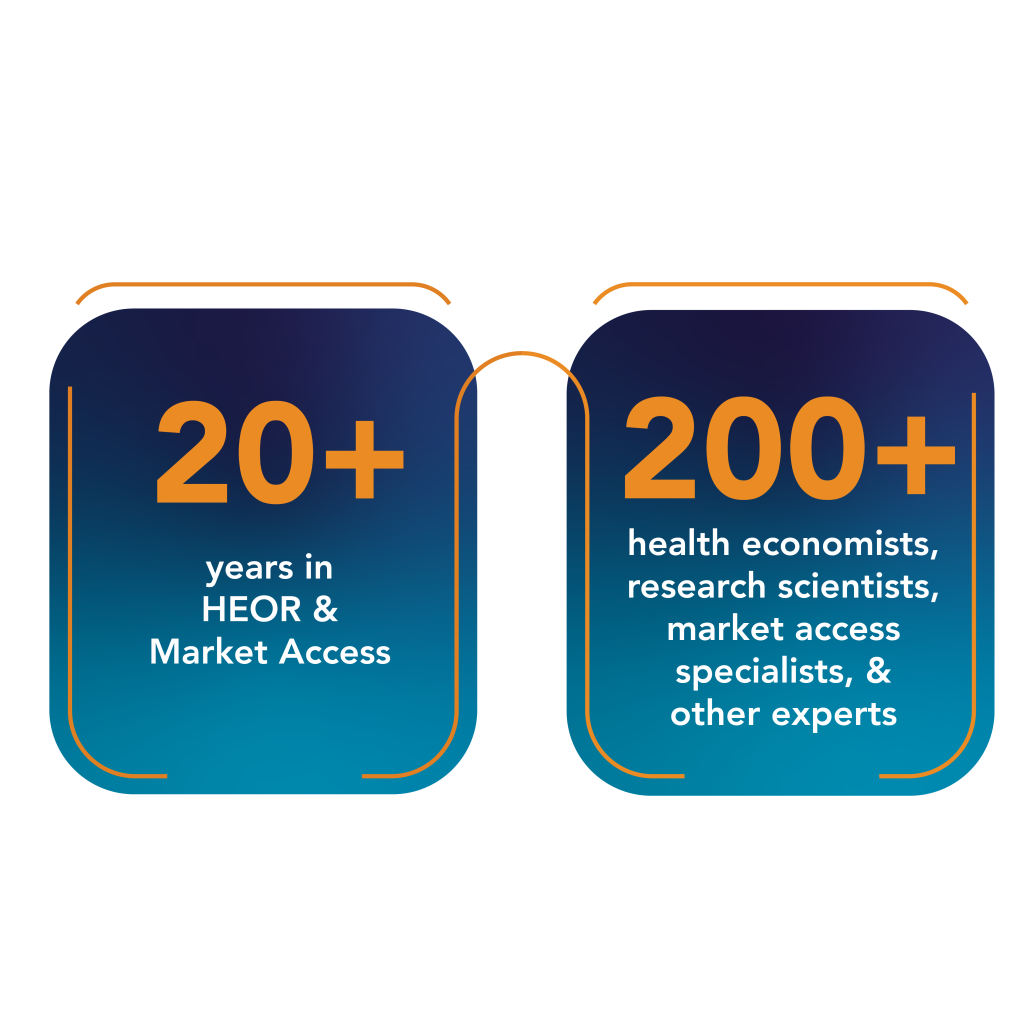
We work with many of the world’s most successful pharmaceutical and medical devices companies, as well as many small innovative medical device and biotechnology companies that are working to help shape the future of patient care.
Global HTA expertise with over 20 years of experience translating complex, country-specific requirements into high-impact submissions across major markets. By combining strategic insight, advanced analytics, ITCs and economic modelling, we deliver strategically aligned, evidence driven outcomes to support successful reimbursement decisions, market access, and payer negotiations.
Comprehensive JCA advice and execution spanning end-to-end services including strategy, evidence generation, full dossier development, and submission. Our team has direct practical experience delivering compliant and successful submissions.
We support approximately one-third of all Canadian HTA submissions reflecting our depth of expertise, high-quality strategy, robust technical expertise, and comprehensive understanding of Canada’s market access ecosystem.
Our US HEOR services translate clinical evidence into compelling payer value by demonstrating real-world effectiveness, quantifying economic impact, and aligning evidence to the needs of payers, ICER, and health systems. We support informed coverage, reimbursement, and access decisions across a broad range of therapies including CAR-T, cell and gene therapy, 505(b)(2), radiopharmaceutical, medical device or diagnostic test.
We deliver rigorous and transparent economic models that demonstrate value and support evidence-based decision-making across clinical development, market access, and reimbursement with robust technical report documentation.
EVERSANA’s medical writers develop persuasive and compelling communications that demonstrate value to key decision-makers. Collaborating across multidisciplinary teams, they integrate evidence synthesis, biostatistics, and economic modelling, leveraging advanced scientific training and certification such as American Medical Writers Association (AMWA).
Our seasoned staff are authors on PRISMA indirect treatment comparison (ITC) guidelines, deliver workshops and panels at major conferences, conduct ITC training for the International Society for Pharmacoeconomics and Outcomes Research (ISPOR), and lead global ITC programs and real-world evidence (RWE) studies.
Our expert team provides end-to-end solutions, from protocol development through publication-ready outputs. Our literature reviews are tailored to the specific evidentiary standards of downstream needs including regulatory, reimbursement, and EU Joint Clinical Assessment (JCA) submissions, indirect treatment comparisons (ITCs), and payer evidence dossiers.
Integrated evidence gap analysis and generation planning to strengthen clinical and value narratives across the product lifecycle. Leveraging extensive experience in HTA and reimbursement environments, our team identifies, demonstrates, and communicates insights to maximize decision making and market access.
Our specialized team supports the demonstration of medical device value and differentiation across complex US reimbursement device categories. We develop stakeholder-specific value propositions and deliver evidence-based insights to optimize product adoption, utilization, and reimbursement throughout the lifecycle.
Explore our library.
HEOR is a scientific field that evaluates clinical, economic, and humanistic (quality of life) value of medical therapies, devices, or other healthcare services. It reflects a universal desire to obtain maximum value for money through not just clinical effectiveness, but also the cost-effectiveness of healthcare provision.
HEOR helps demonstrate the clinical, economic, and humanistic unmet needs, as well as the value of a new therapy. HEOR provides evidence needed to support reimbursement, pricing, and coverage decisions.
A health technology assessment (HTA) is an evaluation of a therapy’s clinical effectiveness, cost-effectiveness, and broader value. HTA agencies use these assessments to inform reimbursement and coverage decisions.
The EU JCA is a centralized clinical assessment process that evaluates the comparative clinical effectiveness and safety of new medicines across European Union member states. Manufacturers must develop evidence packages that meet both regulatory and payer requirements.
Real-world evidence (RWE) is clinical and economic evidence generated from real-world data, including electronic health records, claims data, patient registries and other healthcare sources. RWE helps manufacturers understand how therapies perform outside of controlled clinical trials.
Payers, HTA bodies and healthcare decision-makers increasingly rely on real-world evidence to evaluate treatment effectiveness, healthcare resource utilization and economic value. RWE can help support reimbursement decisions, value demonstrations and market access strategies.
HRQoL is a concept that includes the physical, functional, emotional, and social well-being of an individual. It is a patient-reported outcome (PRO) measured with carefully designed and validated instruments.
PROs capture patients’ perspectives on symptoms, functioning, treatment burden, and health-related quality of life (HRQoL). PRO data play an important role in HEOR by demonstrating the humanistic impact of disease and treatment, supporting value assessments by payers, HTA agencies, and other healthcare decision-makers.
An indirect treatment comparison evaluates the relative efficacy or safety of treatments that have not been compared directly in a clinical trial. These analyses help support payer and HTA decision-making when head-to-head evidence is unavailable.
Value communication involves translating complex clinical, economic, and real-world evidence into clear and compelling messages for payers, HTA agencies, healthcare professionals, and other stakeholders.