
Commercialize a Product
Commercialize with Confidence
EVERSANA’s fully integrated commercialization services unite strategy, execution, and scale — so life sciences products launch stronger, adapt faster, and perform longer in market.
Despite billions invested in launches each year, many products miss expectations. Two in three launches fall short of pre-launch forecast projections, according to EVERSANA Management Consulting research.
Our model changes that equation by unifying data, people, and execution into one coordinated commercialization engine.
For Every Company and Phase
Are you an emerging biotech, an oncology innovator, or a company managing an established brand? Unlock integrated commercialization solutions tailored to your needs today — scalable for tomorrow.
Emerging Pharma & First Launches
- Activate a ready-to-deploy, end-to-end commercial engine
- Reduce upfront investment and execution risk
- Move from development to launch with speed and control
Oncology & Specialty Therapies
- Fit‑for‑purpose commercialization for smaller, complex patient populations
- Integrated data, access, and engagement models
- Deep oncology infrastructure and domain expertise
Established Brands & Lifecycle Management
- Extend brand performance and portfolio value
- Eliminate capacity and capability gaps
- Optimize commercialization across the full brand lifecycle
















Integrated Commercial Services In Action
EVERSANA unifies the capabilities required to commercialize life sciences products, so you’re not managing vendors, handoffs, or disconnected data. Our integrated services deliver a seamless commercial experience and measurable value.
Strategy & Consulting
Distribution & Channel Management
Field Deployment
Patient Services
- Access & Hub
- Adherence Solutions
- Affordability, Co-Pay & PAP
- Specialty Pharmacy
- In-Home Nursing & Clinical Support
- Clinical Trial Programs
Market Access & Value
Marketing
MI, PV & Medical Affairs
Launch Smarter. Maximize Value.

A Full-Scale Launch Model for Emerging Pharma
- Affords investors full access to a complete, end-to-end commercialization model
- Delivers more value than traditional licensing or launching on your own
- Activates ready-to-deploy, high-performance pharma commercial solutions and distribution engine
- Accelerates your product from early development to marketing, positively impacting patient outcomes
- Mitigates risk and combats curveballs that manufacturers cannot predict when launching products

A Customized Commercialization Model for Oncology Therapies
- Offers an integrated platform of commercialization services and fit-for-purpose solutions to support oncology therapy commercialization
- Leverages data-driven solutions to account for smaller patient populations, evolving patient journeys and interactions with the FDA
- Maximizes and compliments existing internal resources to effectively manage go-to-market strategies
- Provides exclusive access to an established infrastructure, networks and expertise in the oncology market that may not be available in-house

A Life Cycle Management Model for Established Brands
- Eliminates capability and capacity restraints to increase the throughput of in-licensed assets
- Serves as a catalyst for biopharma companies to address the management of their established brand portfolios
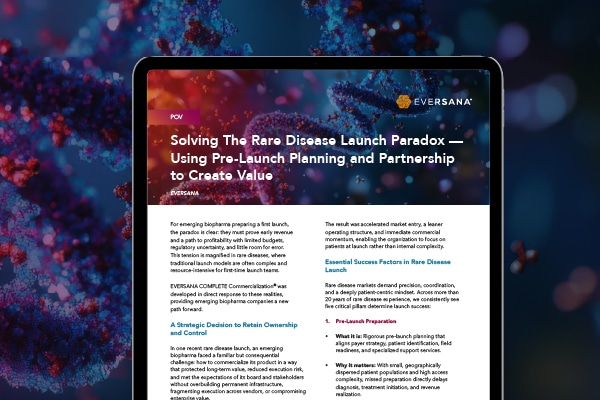
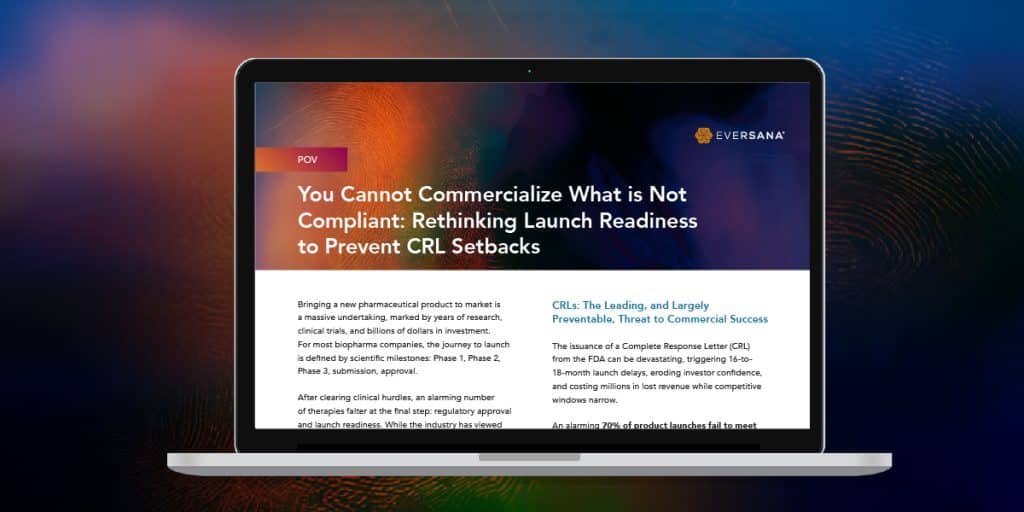
Explore Commercialization Thought Leadership



How can we help you commercialize?
Contact our team now for a complimentary assessment and fast-track your success!
Frequently Asked Questions
What does pharmaceutical commercialization involve?
Pharmaceutical commercialization is the process of bringing a drug or therapy to market. It includes launch planning, market access, patient support programs, field deployment, distribution, marketing, medical affairs, and ongoing lifecycle management.
How do you successfully commercialize a pharmaceutical product?
A successful commercialization strategy requires coordinated planning across market access, distribution, patient services, medical affairs, field teams, and marketing. Companies often use integrated commercialization partners to accelerate launch readiness and improve market performance.
When should a pharmaceutical company start planning commercialization?
Commercialization planning should begin well before regulatory approval — often during late-stage clinical development — to ensure market access, patient support, distribution networks, and launch strategies are ready when the product reaches the market.
What are the biggest challenges in launching a pharmaceutical product?
Common launch challenges include payer access, pricing strategy, patient access and adherence, provider education, distribution complexity, field force deployment, commercial compliance, and coordinating multiple vendors across the commercialization process.
Should you launch or out-license a pharmaceutical product?
Out-licensing is a common strategy for clinical-stage companies to bring products to market through a commercial-stage pharma partner. However, it often comes at a significant cost, with companies sacrificing up to 80% of the net present value (NPV) of their asset.
EVERSANA data consistently shows that companies who launch their own products tend to achieve an average market capitalization more than 6x higher than companies that primarily rely on licensing
Can emerging biotech companies outsource commercialization?
Yes. Many emerging biotech companies partner with commercialization providers to gain access to experienced teams, established infrastructure, innovative technology, and market expertise without building a complete commercial engine internally.
How do commercialization partners help reduce launch risk?
Commercialization partners provide proven launch processes, established infrastructure, market expertise, data-driven decision-making, and scalable resources that support successful product introductions.
Fragmented vendors can create compliance vulnerabilities. A compliance-first commercialization strategy like EVERSANA’s helps reduce CRL incidence and costly delays, protect launch timelines, and maximize asset value.
What should companies consider when selecting a commercialization partner?
Companies should evaluate therapeutic expertise, launch experience, integration capabilities, technology platforms, global reach, market access capabilities, patient support services, marketing services, and the ability to scale as products mature.
What is an integrated commercialization model?
An integrated commercialization model combines strategy, market access, patient services, field deployment, medical affairs, distribution, and marketing into a single coordinated approach that reduces complexity and improves execution.
How does commercialization differ for oncology therapies?
Oncology commercialization often requires specialized market access strategies, smaller patient population support, complex provider networks, evidence generation, and specialized patient engagement programs.
EVERSANA delivers fit‑for‑purpose oncology commercialization suited for smaller, complex patient populations. Deep oncology infrastructure and domain expertise compliments existing internal resources to effectively manage go-to-market strategies.